
I am painting this series Moon Landscapes to ask the question, before we build moon bases, or mine the moon, we should think about the problems of negatively effecting the moons orbit, which then could destroy the earths climate and weather patterns.
Interestingly, to date, America, China, Russia, have sent small space probe satellites to take moon dust from the moon, several pounds, which is actually negative, in that taking to much Moon dirt, puts the Moons orbit into jeopardy.
News Article 2026
Moon dust to bases: New 3D laser technique could be the future of lunar bases, Ohio State University scientists are melting Moon dirt with lasers to build the foundations of lunar bases. Feb 28, 2026 06:59 AM EST , and SpaceX’s Moonbase Alpha: The Future of Lunar Living February 7, 2025 by Admin For half a century, the Moon has waited in silence. Now, humanity is finally answering its call—not just to visit, but to stay. In a historic partnership, NASA and SpaceX are embarking on humanity’s most ambitious lunar venture: establishing the first permanent moon base. At the heart of this mission stands Starship, the most powerful spacecraft ever built, designed not just to reach the Moon but to transform it into our second home. Elon Musk’s Vision for Moonbase Alpha
When Elon Musk unveiled SpaceX’s vision for Moonbase Alpha, he didn’t just present another space project—he revealed humanity’s first real shot at becoming a multiplanetary species. “We want to far exceed what NASA’s asked us to do,” Musk declared, his voice carrying the weight of this historic ambition. “We’re going to build a permanent occupied moon base.”
The name “Moonbase Alpha” resonates deeply with space enthusiasts, drawing inspiration from the iconic lunar base in Space: 1999. However, unlike its fictional counterpart, this base is becoming a reality through cutting-edge technology and human perseverance, all centered around humanity’s most ambitious spacecraft, Starship. Engineering Challenges of the Lunar Environment,Surviving the Moon’s Gravity and Radiation The lunar environment presents a complex web of hazards that must be overcome for any hope of long-term survival. One of the most immediate challenges is the Moon’s reduced gravity—just one-sixth of what we experience on Earth. This seemingly simple difference creates a cascade of complications that threaten the very stability of the base. Picture a pencil balanced on its tip—that’s essentially what a vertical Starship faces on the lunar surface.
ALSO, Mining the moon for minerals could be worth billions, but astronomers warn it’s bad news for science By Joshua Nelken-Zitser mages Feb 25, 2025, 3:20 AM PT, Moon mining could become a multibillion-dollar industry. The moon holds resources like rare earth elements, water ice, and helium-3. But astronomists say large-scale lunar mining could be bad news for scientific research.
Mining the moon for water, helium-3, and rare earth elements could become a multibillion-dollar industry in the near future, but astronomers warn it risks coming at the expense of scientific discovery.The NASA-sponsored Jet Propulsion Laboratory estimates that the moon holds untapped resources worth hundreds of billions of dollars.These include water ice, which could support lunar habitation or be converted into rocket fuel, and rare earth elements, which are a key component in modern electronics.


Moon Landscape # 1, Acrylic on paper, 11 in x 8.5 in, 2024 ( photographed + photoshop + reprinted giclee on paper, 33 in x 25. 5 in, 66 in x 51 in, 2028)

Moon Landscape # 2, Acrylic on paper, 11 in x 8.5 in, 2024 ( photographed + photoshop + reprinted giclee on paper, 33 in x 25. 5 in, 66 in x 51 in, 2028)

Moon Landscape # 3 , Acrylic on paper, 11 in x 8.5 in, 2024 ( photographed + photoshop + reprinted giclee on paper, 33 in x 25. 5 in, 66 in x 51 in, 2028)

Moon Landscape # 4 , Acrylic on paper, 11 in x 8.5 in, 2024 ( photographed + photoshop + reprinted giclee on paper, 33 in x 25. 5 in, 66 in x 51 in, 2028)

Moon Landscape # .5 , Acrylic on paper, 11 in x 8.5 in, 2024 ( photographed + photoshop + reprinted giclee on paper, 33 in x 25. 5 in, 66 in x 51 in, 2028)

Moon Landscape # 6 , Acrylic on paper, 11 in x 8.5 in, 2024 ( photographed + photoshop + reprinted giclee on paper, 33 in x 25. 5 in, 66 in x 51 in, 2028)

Moon Landscape # 7 , Acrylic on paper, 11 in x 8.5 in, 2024 ( photographed + photoshop + reprinted giclee on paper, 33 in x 25. 5 in, 66 in x 51 in, 2028)

Moon Landscape # 8 , Acrylic on paper, 11 in x 8.5 in, 2024 ( photographed + photoshop + reprinted giclee on paper, 33 in x 25. 5 in, 66 in x 51 in, 2028)

Moon Landscape # 9 , Acrylic on paper, 11 in x 8.5 in, 2024 ( photographed + photoshop + reprinted giclee on paper, 33 in x 25. 5 in, 66 in x 51 in, 2028)

Moon Landscape # 10 , Acrylic on paper, 11 in x 8.5 in, 2024 ( photographed + photoshop + reprinted giclee on paper, 33 in x 25. 5 in, 66 in x 51 in, 2028)
https://science.nasa.gov/moon/facts
Moon Facts
Earth’s Moon records evidence of our solar system’s history in the form of impact craters, cooled lava landforms, ancient ice deposits, and more.
10 things
Contents
- How the Moon Got Its Name
- Potential for Life
- Size and Distance
- Orbit and Rotation
- Rings
- Moons
- Formation
- Structure
- Surface
- Water on the Moon
- Atmosphere
- Magnetosphere
https://solarsystem.nasa.gov/gltf_embed/2366/?height=450&rotate=true&cc=true&fs=true&target=&orbit=
A 3D model of Earth’s Moon.
NASA Visualization Technology Applications and Development (VTAD)
How the Moon Got Its Name
Our Moon shares a name with all moons simply because people didn’t know other moons existed until Galileo Galilei discovered four moons orbiting Jupiter in 1610. In Latin, the Moon was called Luna, which is the main adjective for all things Moon-related: lunar.
Potential for Life
The many missions that have explored the Moon have found no evidence to suggest it has its own living things. However, the Moon could be the site of future colonization by humans. The discovery that the Moon harbors water ice, and that the highest concentrations occur within darkened craters at the poles, makes the Moon a little more hospitable for future human colonists.
Size and Distance
With a radius of about 1,080 miles (1,740 kilometers), the Moon is less than a third of the width of Earth. If Earth were the size of a nickel, the Moon would be about as big as a coffee bean.
The Moon is an average of 238,855 miles (384,400 kilometers) away. That means 30 Earth-sized planets could fit in between Earth and the Moon.
The Moon is slowly moving away from Earth, getting about an inch farther away each year.

NASA/Moore Boeck
Orbit and Rotation
The Moon is rotating at the same rate that it revolves around Earth (called synchronous rotation), so the same hemisphere faces Earth all the time. Some people call the far side – the hemisphere we never see from Earth – the “dark side”, but that’s misleading.
As the Moon orbits Earth, different parts are in sunlight or darkness at different times. The changing illumination is why, from our perspective, the Moon goes through phases. During a “full moon,” the hemisphere of the Moon we can see from Earth is fully illuminated by the Sun. And a “new moon” occurs when the far side of the Moon has full sunlight, and the side facing us is having its night.
The Moon makes a complete orbit around Earth in 27 Earth days and rotates or spins at that same rate, or in that same amount of time. Because Earth is moving as well – rotating on its axis as it orbits the Sun – from our perspective, the Moon appears to orbit us every 29 days.
Rings
The Moon has no rings.
Moons
Earth’s Moon has no moons of its own.
Formation
The Moon likely formed after a Mars-sized body collided with Earth several billion years ago.
The resulting debris from both Earth and the impactor accumulated to form our natural satellite 239,000 miles (384,000 kilometers) away. The newly formed Moon was in a molten state, but within about 100 million years, most of the global “magma ocean” had crystallized, with less-dense rocks floating upward and eventually forming the lunar crust.
Structure
Earth’s Moon has a core, mantle, and crust.
The Moon’s core is proportionally smaller than other terrestrial bodies’ cores. The solid, iron-rich inner core is 149 miles (240 kilometers) in radius. It is surrounded by a liquid iron shell 56 miles (90 kilometers) thick. A partially molten layer surrounds the iron core.
The mantle extends from the top of the partially molten layer to the bottom of the Moon’s crust. It is most likely made of minerals like olivine and pyroxene, which are made up of magnesium, iron, silicon, and oxygen atoms.
The crust is about 25 miles (40 kilometers) thick on the Moon’s near-side hemisphere and up to about 37 miles (60 kilometers) thick on the far-side. It is made of oxygen, silicon, magnesium, iron, calcium, and aluminum, with small amounts of titanium, uranium, thorium, potassium, and hydrogen.
Long ago the Moon had active volcanoes, but today they are all dormant and have not erupted for millions of years.
Surface
With too sparse an atmosphere to impede impacts, a steady rain of asteroids, meteoroids, and comets strikes the surface of the Moon, leaving numerous craters behind. Tycho Crater is more than 52 miles (85 kilometers) wide.
Over billions of years, these impacts have ground up the surface of the Moon into fragments ranging from huge boulders to powder. Nearly the entire Moon is covered by a rubble pile of charcoal-gray, powdery dust, and rocky debris called the lunar regolith. Beneath is a region of fractured bedrock referred to as the megaregolith.
The light areas of the Moon are known as the highlands. The dark features, called maria (Latin for seas), are impact basins that were filled with lava between 4.2 and 1.2 billion years ago. These light and dark areas represent rocks of different compositions and ages, which provide evidence for how the early crust may have crystallized from a lunar magma ocean. The craters themselves, which have been preserved for billions of years, provide an impact history for the Moon and other bodies in the inner solar system.
If you looked in the right places on the Moon, you would find pieces of equipment, American flags, and even a camera left behind by astronauts. While you were there, you’d notice that the gravity on the surface of the Moon is one-sixth of Earth’s, which is why in footage of moonwalks, astronauts appear to almost bounce across the surface.
The temperature on the Moon reaches about 260 degrees Fahrenheit (127 degrees Celsius) when in full Sun, but in darkness, the temperatures plummet to about -280 degrees Fahrenheit (-173 degrees Celsius).
Water on the Moon
During the initial exploration of the Moon, and the analysis of all the returned samples from the Apollo and the Luna missions, we thought that the surface of the Moon was dry.
The first definitive discovery of water was made in 2008 by the Indian mission Chandrayaan-1, which detected hydroxyl molecules spread across the lunar surface and concentrated at the poles. Missions such as Lunar Prospector, LCROSS, and Lunar Reconnaissance Orbiter, have not only shown that the surface of the Moon has global hydration but there are actually high concentrations of ice water in the permanently shadowed regions of the lunar poles.
https://www.youtube.com/embed/X8Zz14hQzgg?feature=oembed&enablejsapi=1&origin=https://science.nasa.gov Scientists have discovered that water is being released from the Moon during meteor showers.
NASA’s Goddard Space Flight Center
Scientists also found the lunar surface releases its water when the Moon is bombarded by micrometeoroids. The surface is protected by a layer, a few centimeters of dry soil that can only be breached by large micrometeoroids. When micrometeoroids impact the surface of the Moon, most of the material in the crater is vaporized. The shock wave carries enough energy to release the water that’s coating the grains of the soil. Most of that water is released into space.
In October 2020, NASA’s Stratospheric Observatory for Infrared Astronomy (SOFIA) confirmed, for the first time, water on the sunlit surface of the Moon. This discovery indicates that water may be distributed across the lunar surface, and not limited to cold, shadowed places. SOFIA detected water molecules (H2O) in Clavius Crater, one of the largest craters visible from Earth, located in the Moon’s southern hemisphere.
> Discovery Timeline: Water & Ices on the Moon
Atmosphere
The Moon has a very thin and weak atmosphere. It does not provide any protection from the Sun’s radiation or impacts from meteoroids.
Magnetosphere
The early Moon may have developed an internal dynamo, the mechanism for generating global magnetic fields for terrestrial planets, but today, the Moon has a very weak magnetic field. The magnetic field here on Earth is many thousands of times stronger than the Moon’s magnetic field.
Many photos were released in the weeks following the mission’s end, but now NASA has released a whopping 12,217. You can scroll through them yourself on the agency’s public archive of astronaut photographs. Here are some of our top picks.
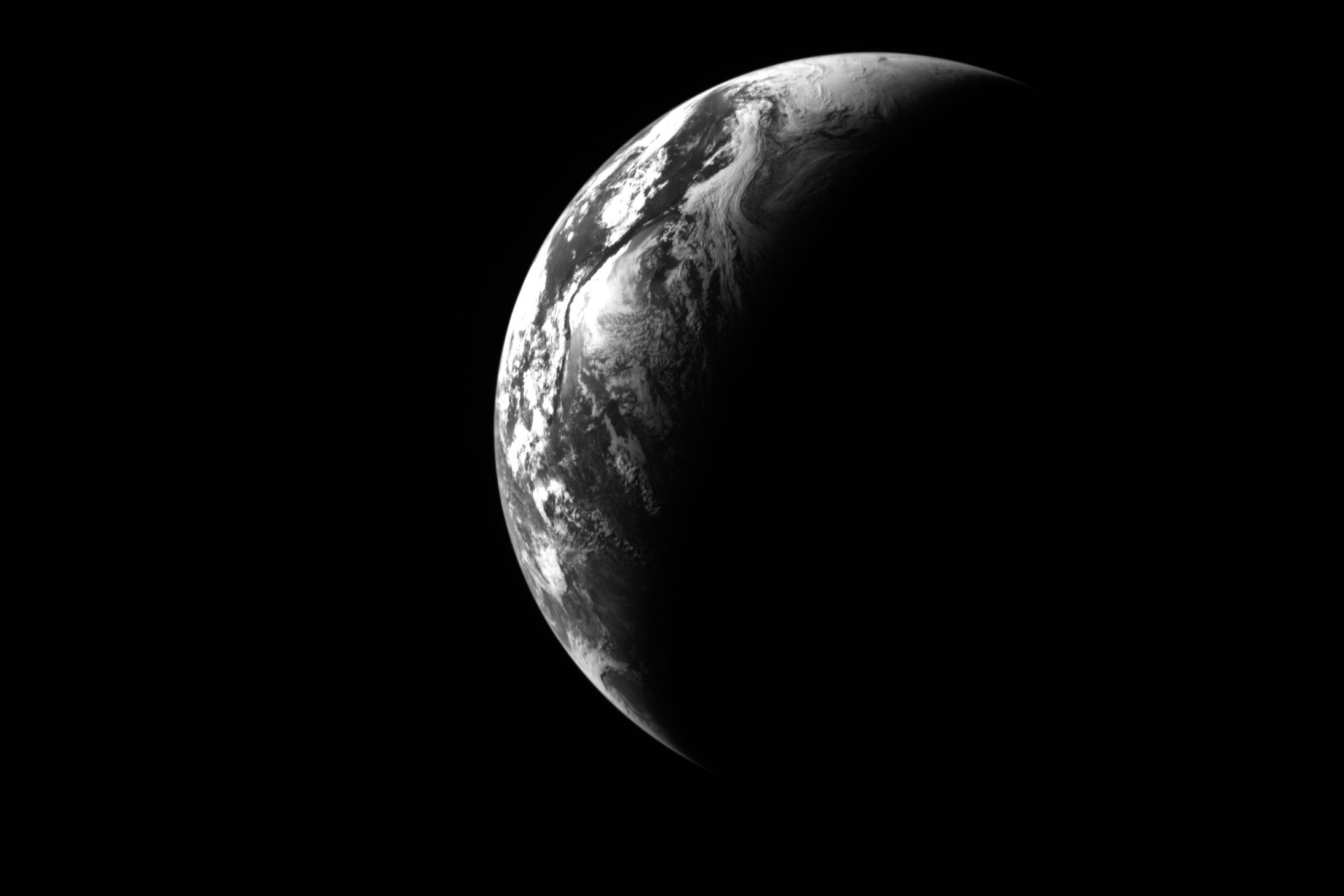
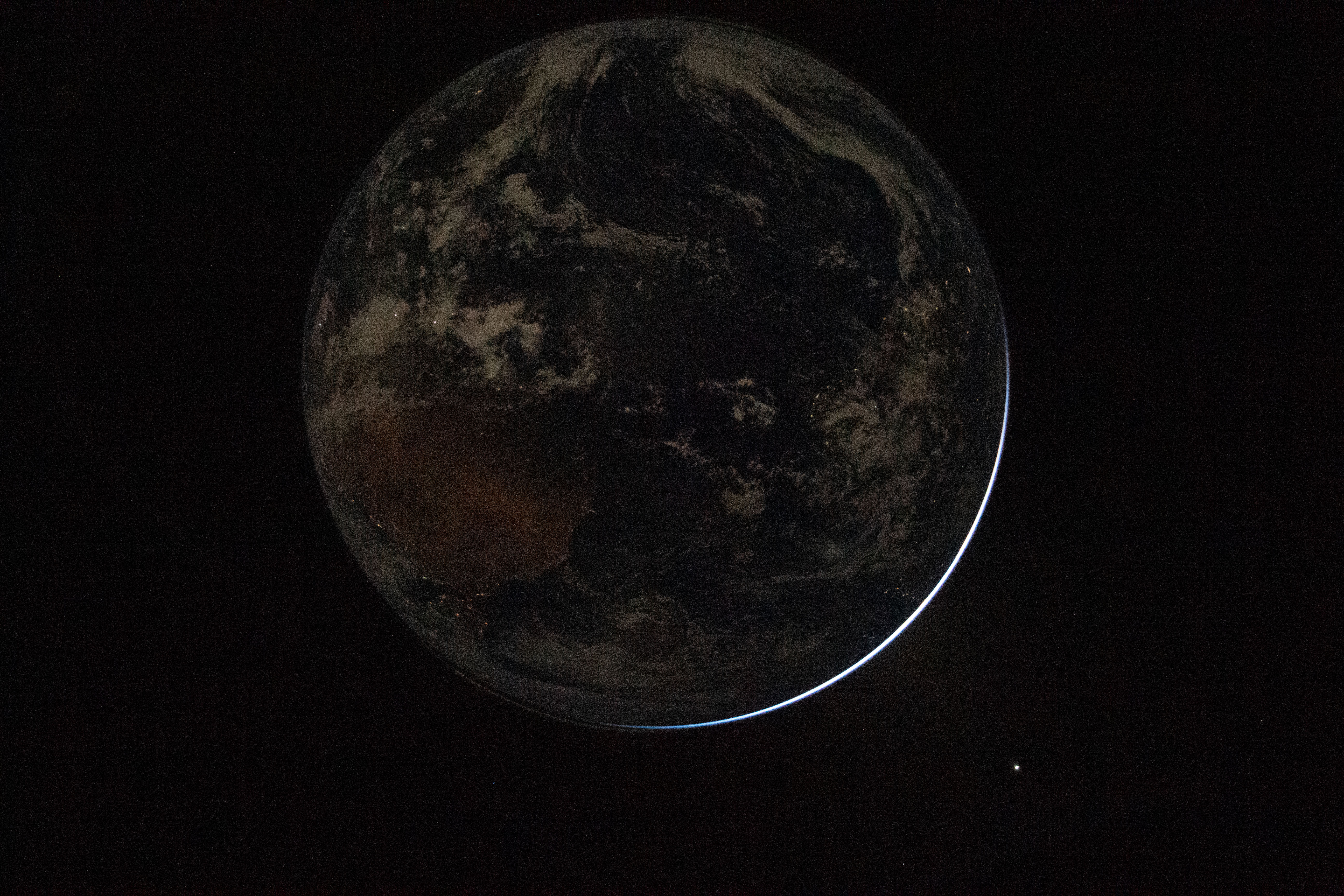
The two images above show Earth mostly in the dark. They were shot on April 3, as Orion was on its way to lunar space.
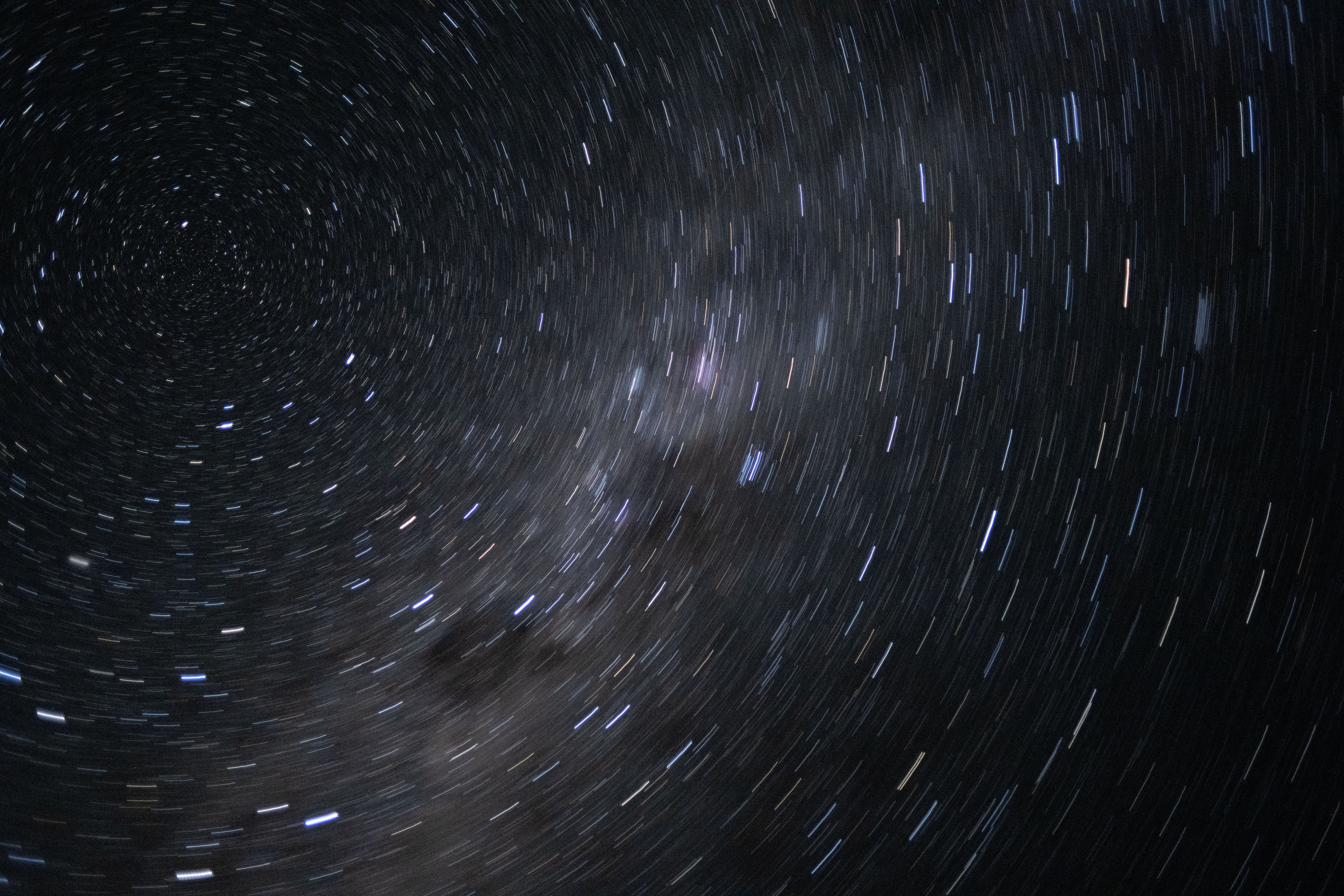
This is a six-second exposure of the stars seen outside Intregrity’s window. To get a photo like this on Earth, you need several minutes of exposures for the star trails to start becoming clear. Orion, however, spent its journey to the moon rotating to distribute the heat buildup from the sun, a spin captured by the above photograph.
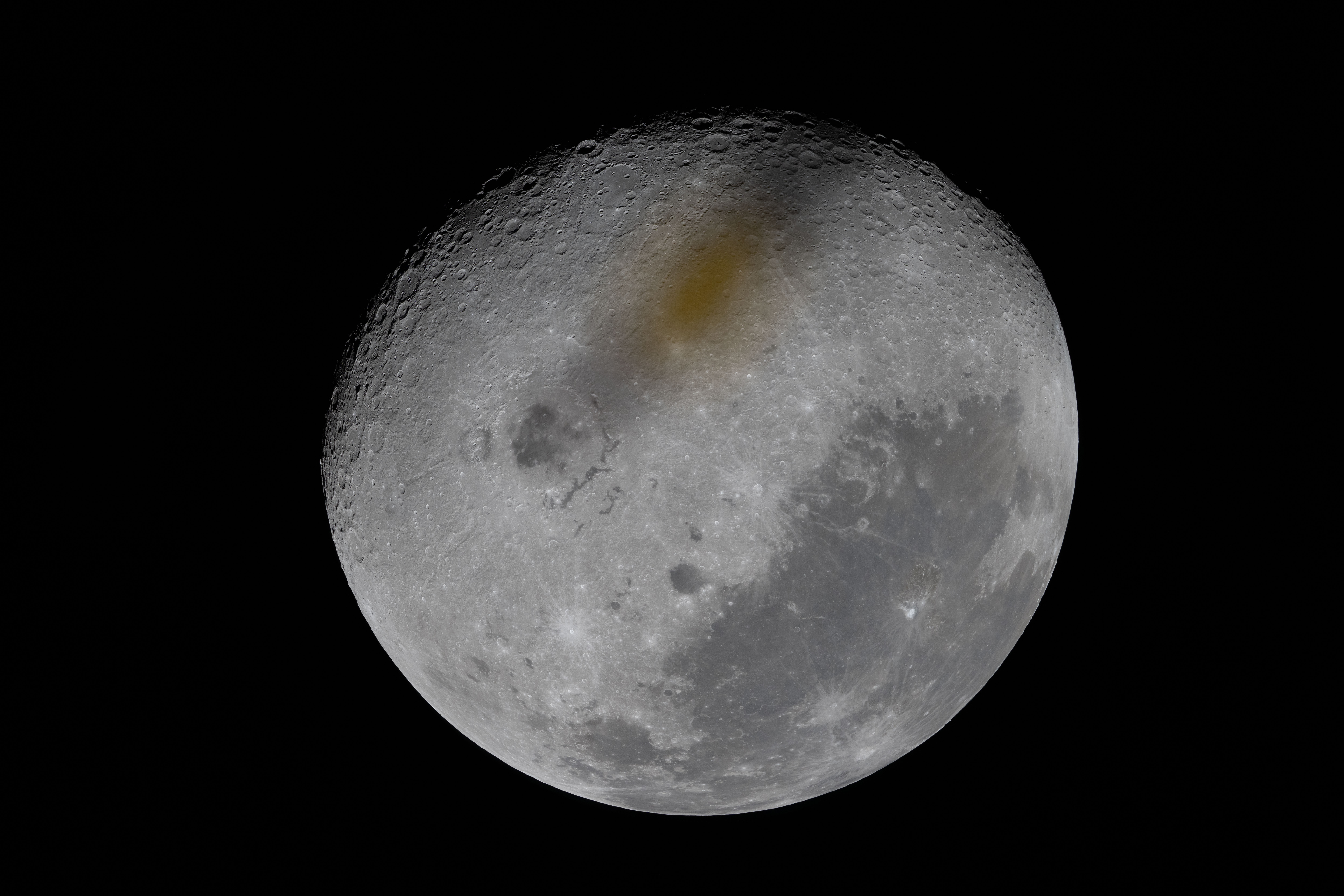
This picture shows the moon with a brown, almost rust-colored region on its face. During their trip around the moon, the Artemis 2 astronauts described seeing browns, greens and other subtle colors on the lunar surface.

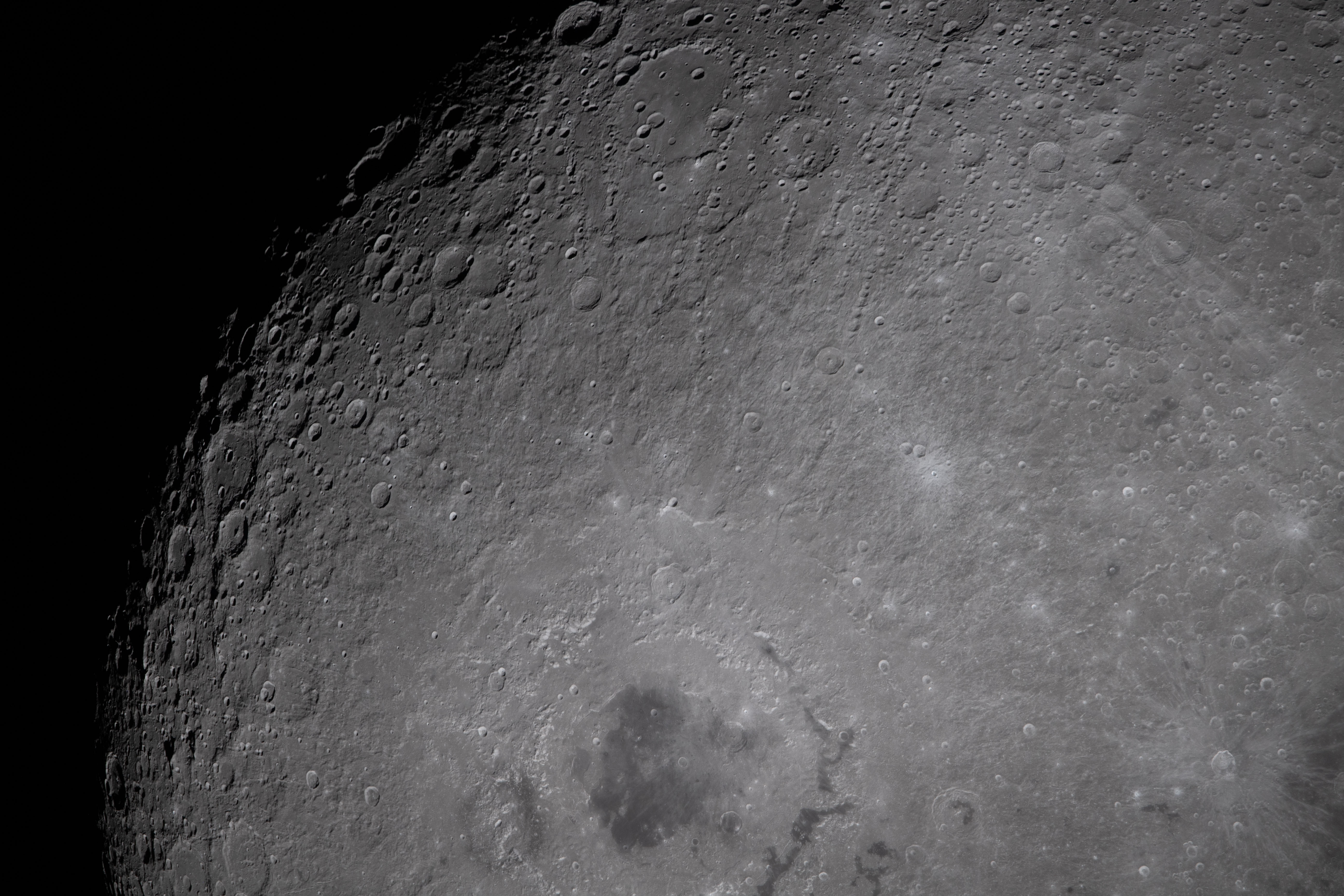
This image of the moon’s surface features two small craters named by the Artemis 2 crew. One they named “Integrity,” after the spacecraft that kept them safe throughout their mission. The other they named “Carroll,” after Wiseman’s late wife, who died of cancer in 2020.
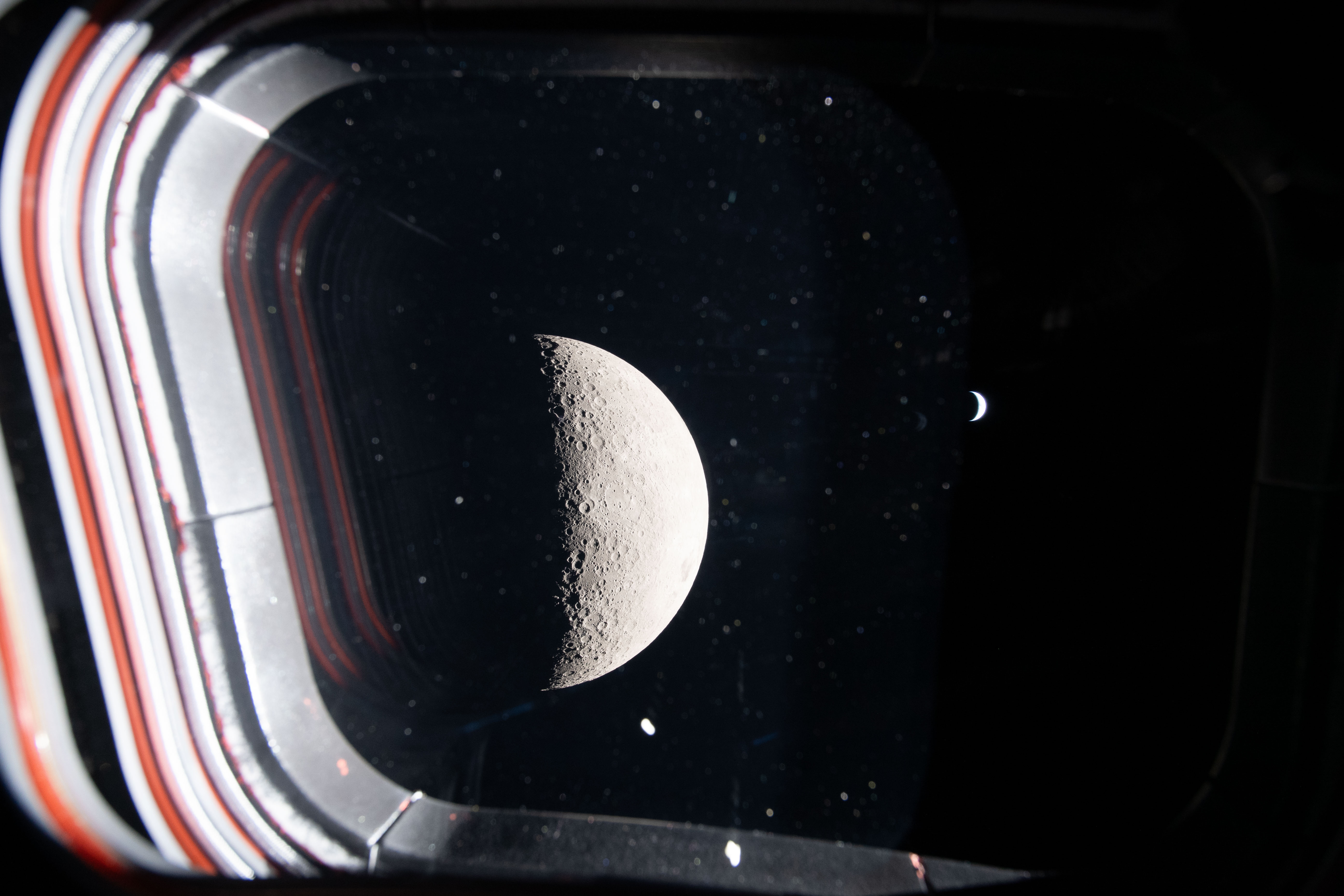
From the far side of the moon, the astronauts snapped this photo through one of Orion’s windows. It shows a quarter moon in the foreground, with a bright but tiny Earth behind.
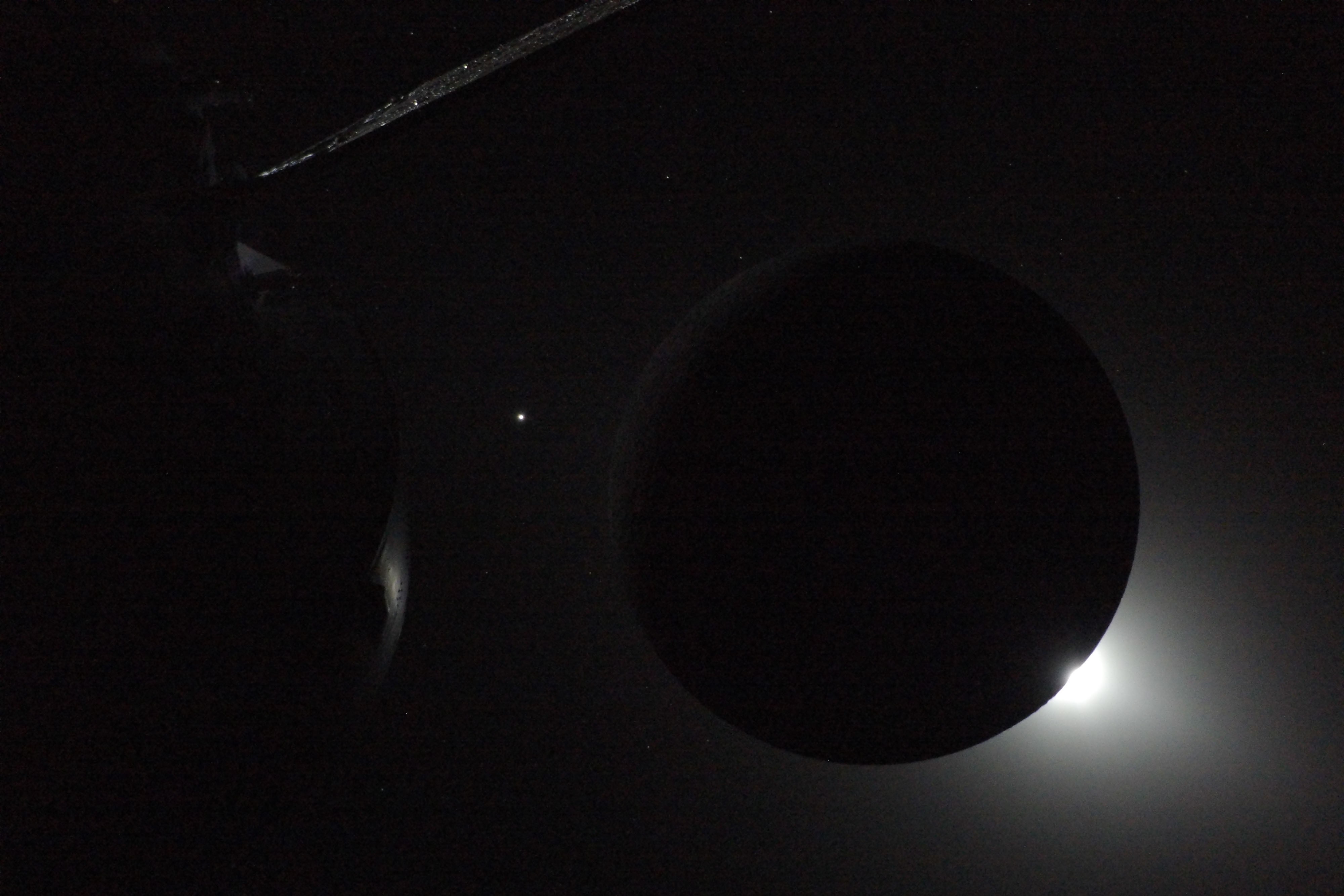
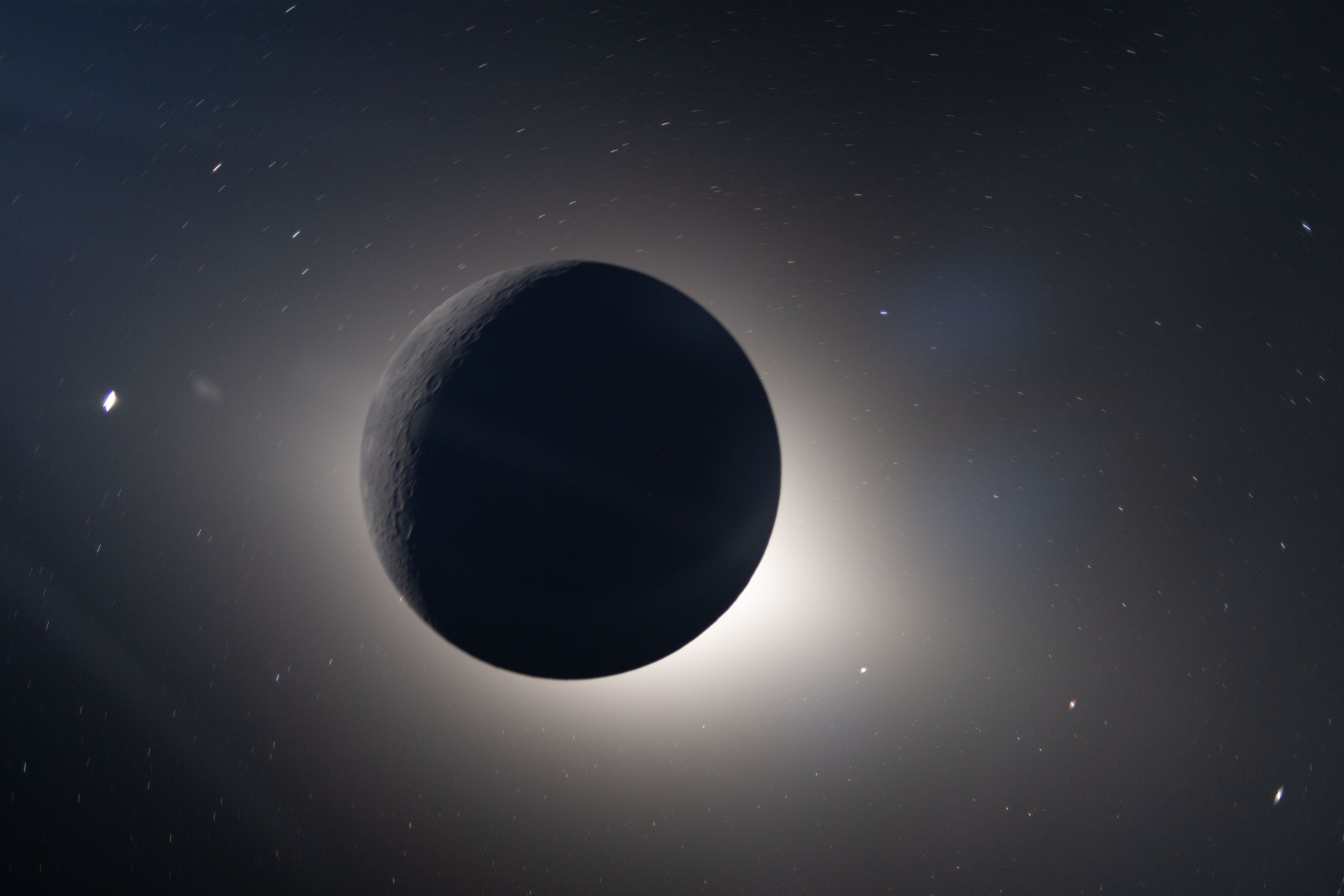
During their lunar flyby on April 6, the Artemis 2 crew witnessed a solar eclipse from beyond the far side, when the sun dipped behind the planetary body’s disk. For the astronauts, the sun’s corona, or outer atmosphere, shone brightly, providing a rare perspective of the moon.
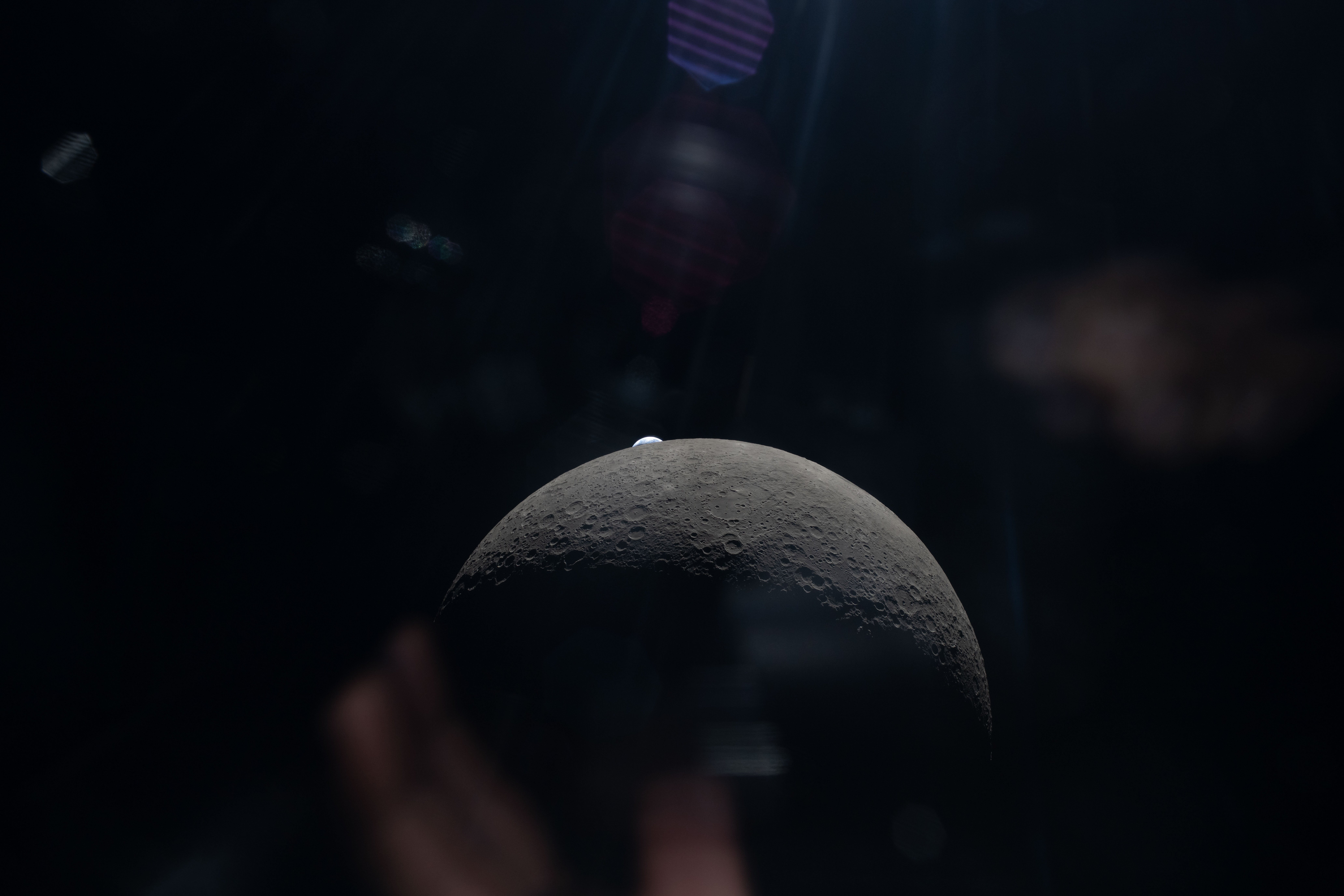
Finally, a tiny Earth peeks out from behind the moon in this image shot shortly after the end of the crew’s closest lunar approach. During their mission, the Artemis 2 astronauts flew farther from Earth than any crewed mission in history, reaching a maximum distance of approximately 252,760 miles (406,773 km).